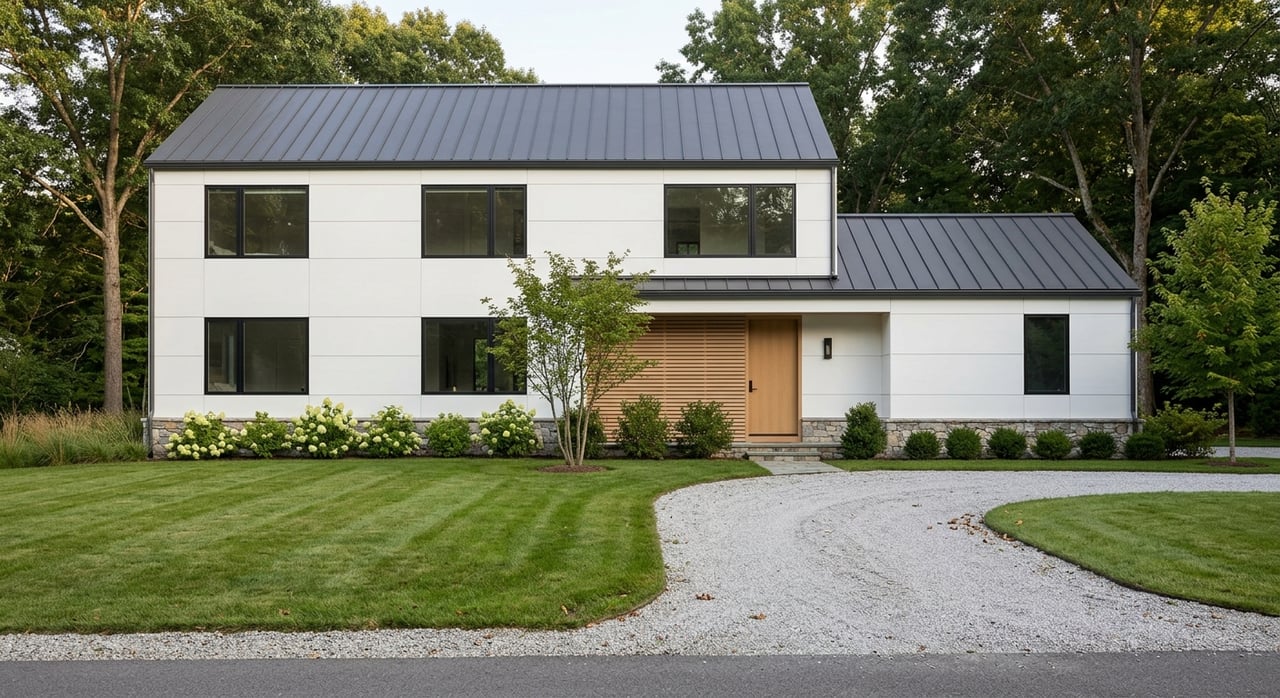
Trying to decide what “fits” you in Rockland County? That question matters more than almost anything else, because Rockland is not one-note. Some areas feel compact and close to downtown activity, some feel like classic detached-home suburbia, and some offer a more wooded, lower-density setting. If you understand those differences early, you can narrow your search faster and make a more confident move. Let’s dive in.
Rockland Has Three Main Living Styles
Rockland County planning documents describe the county as a mix of traditional mixed-use village and hamlet centers and lower-density suburban residential areas. They also note that village centers and downtown areas make up just over 2% of total land area, while parkland and open space take up a large share of the county.
That helps explain why Rockland can feel so different from one place to the next. Across the county, detached single-family homes still dominate the housing stock at 56%, and the county’s owner-occupied rate is 67.9%. In short, Rockland is largely suburban, but with clear village pockets and some rural-feeling edges.
Village Style Means Compact and Mixed-Use
If you want a more compact setting, village-style living is the clearest fit. In Rockland, this pattern is concentrated in places like Nyack, Spring Valley, Haverstraw, West Haverstraw, and Piermont, which are described by state and county sources as some of the county’s densest land-use areas.
In practical terms, village-style living usually means more housing variety. You may see older homes, converted houses, apartments, condos, co-ops, and mixed-use buildings near downtown streets rather than long stretches of detached homes.
What Village Areas Often Offer
Village settings can make sense if you want a neighborhood with a more compact footprint and a broader mix of housing types. These areas tend to feel different from the larger suburban sections of the county because the built form is denser and more varied.
Common traits include:
- A mix of homes, apartments, condos, and co-ops
- Older housing stock in some locations
- Mixed-use streets near downtown areas
- Lower owner-occupancy rates than classic suburban neighborhoods
Rockland Examples of Village Living
The ownership data helps show the difference. Census QuickFacts reports owner-occupied rates of 32.6% in Nyack, 25.0% in Spring Valley, 49.6% in Haverstraw, and 58.4% in West Haverstraw.
Those numbers are well below many suburban parts of Rockland, which supports the idea that these areas generally have more rental and multifamily presence. For buyers, that can translate into a wider range of entry points depending on the exact property type.
Pricing in Village-Style Areas
There is no single price rule for village locations, because inventory can vary a lot from block to block. Countywide Q1 2026 data shows condos at $475,000 and co-ops at $120,000, which gives useful context for buyers looking at housing types often found in denser areas.
That does not mean every village property will fall in that range. It means village-style housing often brings more product variety, and that can create more pricing variety too.
Suburban Style Is Rockland’s Core Identity
If you picture Rockland as a classic suburban county, you are not wrong. The county planning department explicitly describes Rockland as a “livable, sustainable, suburban community,” and the broader housing data strongly supports that view.
This is the style many buyers think of first. It is typically shaped by detached-home neighborhoods, stronger owner-occupancy, and housing built largely in the postwar to late-20th-century period.
What Suburban Rockland Looks Like
The most recognizably suburban areas include places like Clarkstown, New City, Pearl River, Nanuet, and Suffern. These locations tend to line up with the county’s lower-density residential pattern rather than the compact village model.
Because the countywide median year built is 1970, much of the housing fabric reflects that era. In day-to-day terms, that often means colonials, split-levels, ranches, capes, and townhomes rather than apartment-heavy streets.
Ownership Rates Tell the Story
QuickFacts gives a strong read on where Rockland feels most suburban. New City is 93.2% owner-occupied, Pearl River is 77.4%, Suffern is 70.4%, and Nanuet is 64.8%.
Those figures are far closer to what many buyers associate with stable detached-home neighborhoods. If you want a setting where owner-occupied housing is more common, these areas are often where your search begins.
Price Range in Suburban Areas
Suburban Rockland pricing tends to cluster near the county average, but it is still important to treat that as a range rather than a fixed rule. Current listing medians reported in the research include about $808,800 in New City, $738,000 in Suffern, and $612,000 in Nanuet, compared with roughly $800,000 countywide.
Countywide market anchors also help frame expectations. As of March and April 2026, Rockland’s median sale price was reported at $680,000, while Q1 2026 OneKey MLS data showed single-family homes at $755,000.
Rural-Feeling Areas Are Wooded and Lower Density
Rockland also has places that feel quieter, more wooded, and more lot-driven. These are best understood as rural-feeling pockets, not truly remote exurban areas.
County planning puts a strong focus on preserving open space and limiting sprawl, and that matters here. Parkland and open space occupy a large share of the county, which helps create a more natural setting in some edge areas.
What Rural-Feeling Means in Rockland
In this county, rural-feeling usually means lower-density surroundings, more tree cover, and a stronger sense of privacy. It does not necessarily mean farmland, very low prices, or long distances from everything.
That distinction is important for buyers. You may get a more tucked-away setting, but still remain within a county that is shaped by suburban patterns overall.
Sloatsburg and Stony Point as Examples
A clear public example is Sloatsburg. Draft zoning language says the village aims to maintain its “rural woodland character” and includes areas for large-lot, single-family detached residential development.
Stony Point is another useful reference point. Its owner-occupied housing rate is 85.2%, which supports the idea of a more established, ownership-oriented setting with lower-density character.
Rural-Feeling Does Not Always Mean Cheaper
One of the biggest buyer misconceptions is assuming more land or a more secluded setting automatically costs less. In Rockland, that is not necessarily true.
The research shows a median listing price of about $761,222 in Sloatsburg and $757,500 in Stony Point. Those figures sit near county norms, showing that privacy, limited inventory, and lot appeal can keep values firm.
How To Choose the Right Rockland Style
The easiest way to compare Rockland neighborhood styles is by looking at your daily routine. The county’s planning framework and housing data support a simple three-part lens: village equals compact and mixed-use, suburban equals detached-home and owner-occupied, rural-feeling equals wooded and lot-driven.
If you start there, your search usually becomes more focused. Instead of asking only how many bedrooms you want, you begin asking how you want the area around you to function.
Ask Yourself These Questions
Before you start touring homes, think through the basics:
- Do you want a compact setting with a wider mix of housing types?
- Do you prefer a classic detached-home neighborhood?
- Do you want more trees, privacy, or larger-lot surroundings?
- Are you open to condos, co-ops, or townhomes?
- Do you want to stay close to county price averages, or are you flexible based on style?
These questions can save you time. They also help you compare homes more fairly across very different parts of Rockland.
Why This Matters for Buyers and Sellers
For buyers, understanding neighborhood style helps you avoid looking at the wrong inventory. A condo or co-op search may make more sense in compact village areas, while detached single-family buyers may find more options in suburban corridors or lower-density sections of the county.
For sellers, this framing can improve how your home is positioned. A property in a village-style area should not be marketed the same way as a detached suburban home or a wooded, lot-driven property.
That is where local guidance matters. When you understand how your property fits into Rockland’s broader housing pattern, pricing and presentation become much clearer.
If you are weighing where to buy, planning a sale, or comparing resale homes with new-construction options, working with a team that understands Rockland’s neighborhood patterns can make the process much more efficient. To talk through your goals and narrow down the right fit, connect with Moshe Karniol.
FAQs
What does village-style living mean in Rockland County?
- Village-style living in Rockland County generally refers to compact, mixed-use areas such as Nyack, Spring Valley, Haverstraw, West Haverstraw, and Piermont, where you are more likely to see apartments, condos, co-ops, older homes, and mixed-use buildings.
What areas feel most suburban in Rockland County?
- Places like New City, Pearl River, Nanuet, Suffern, and parts of Clarkstown are among the clearest examples of suburban Rockland, with higher owner-occupancy rates and more detached-home neighborhoods.
Are rural-feeling areas in Rockland County less expensive?
- Not always. Research in this report shows listing prices in places like Sloatsburg and Stony Point can sit near county norms, which means land, privacy, and limited inventory can support pricing.
What is the typical home price in Rockland County right now?
- As of March and April 2026, the research report cites a county median sale price of $680,000, a median listing price of about $800,000, and Q1 2026 OneKey MLS figures of $755,000 for single-family homes, $475,000 for condos, and $120,000 for co-ops.
How can you decide which Rockland County neighborhood style fits you best?
- The simplest approach is to match your daily-life priorities to the county’s three main patterns: compact and mixed-use village living, detached-home suburban living, or wooded and lower-density rural-feeling living.